
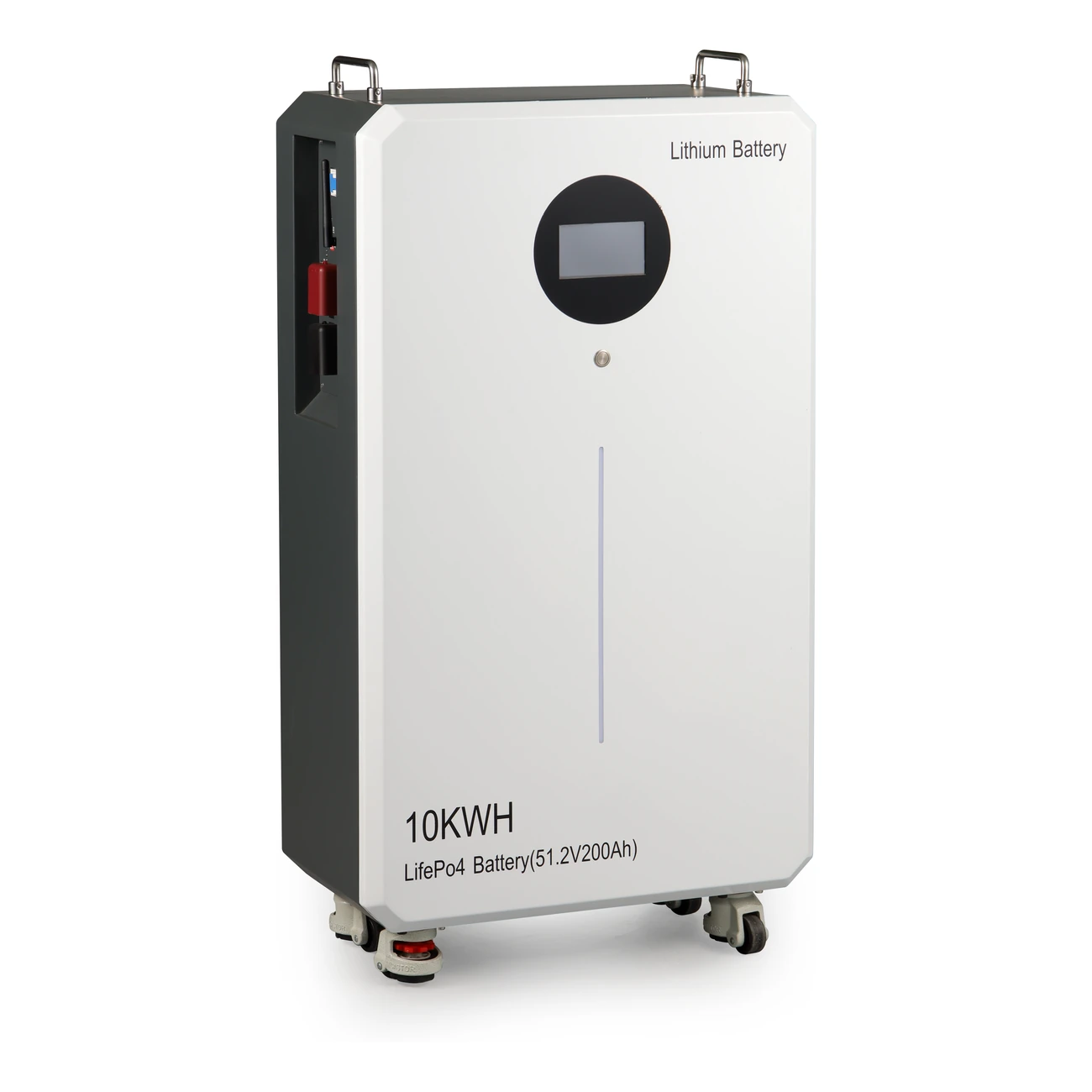
Buyers often ask us the same question: why do you build with LiFePO4 when NMC cells are lighter and hold more energy per kilogram? It is a fair question, and the short answer is that a home battery is not a phone. It sits on a wall or a floor for a decade, it is charged every night, and its job is to be boring and reliable. Once you frame the problem that way, the chemistry choice stops being about energy density.
Here is the reasoning we use, and the questions we would ask any supplier — including us.
1. Thermal stability is not a marketing word
LiFePO4 has an olivine crystal structure that holds onto its oxygen even under abuse. NMC’s layered oxide structure can release oxygen when it overheats, which is what turns a single failing cell into a chain reaction. This does not mean NMC is unsafe — it means the safety work has to be done by the pack design instead of being largely inherent to the cell. For a unit mounted inside a garage or a utility room, that difference matters.
2. Cycle life is where the cost is decided
A typical LiFePO4 cell is rated in the thousands of cycles at deep depth of discharge; NMC is usually rated in the low thousands at shallower discharge. A home battery sees a cycle almost every day. Over ten years that is roughly 3,000-plus cycles, and the difference between a pack that is still near 80% state of health and one that has fallen well below it is decided by chemistry long before it is decided by the warranty document.
3. Energy density — where NMC genuinely wins
NMC cells are lighter and more compact for the same stored energy. In a phone, an electric car or anything that has to move, that advantage is decisive. In a wall-mounted 10 kWh unit, the pack is bolted to a structure and never carries itself anywhere. Extra kilograms cost freight, but they do not cost the user anything at the point of use, so we would rather spend that mass on thermal margin and enclosure strength.
4. Depth of discharge and real usable capacity
LiFePO4 tolerates deep discharge and high charge rates with less stress than NMC. That lets us quote a usable capacity close to the nameplate figure without hiding behind a large reserve. When you compare two datasheets, ask for usable energy at the stated depth of discharge — a 10 kWh label with a 90% DoD limit is a 9 kWh battery in practice.
5. Voltage curve and what it tells you
LiFePO4 has a much flatter state-of-charge voltage curve than NMC. That makes voltage a poor fuel gauge unless the BMS does proper coulomb counting, which is why the quality of the BMS matters more with LiFePO4. It also means the platform voltage is slightly lower for the same series count. Neither is a problem; both are simply design facts a supplier should be able to explain.
What to ask before you sign a purchase order
- Which cell chemistry and format is in the exact model I am buying?
- What is the rated cycle life, at what depth of discharge and temperature?
- What is the usable kWh, not just the nameplate kWh?
- How does the BMS estimate state of charge on a flat voltage curve?
- What test report covers the cell and the complete pack?
If the answers are vague, the price is probably the only thing that was engineered. We build 5–16 kWh LiFePO4 home batteries and 300 W – 2500 W portable stations in Guzhen, Zhongshan. Request a quote or ask us for the cell and pack reports for the model you are considering.
By the Kangjun engineering team · Last updated: 20 November 2026
Related models: 5 kWh KJ-48100-5 · 10 kWh KJ-48200-10 · 16 kWh KJ-16 · Compare all models