
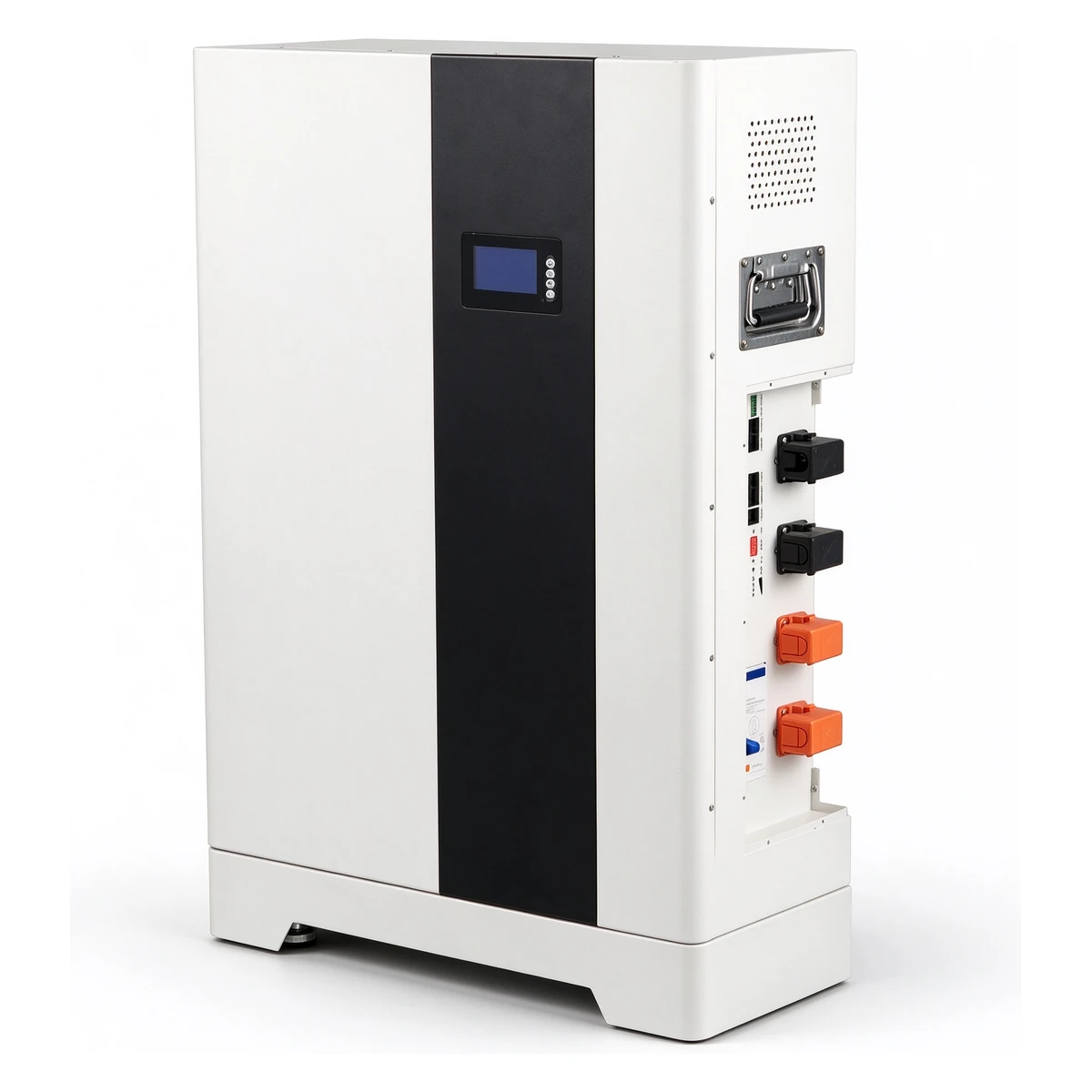
Start with kilowatt-hours per day, not with the label on the box
Most sizing mistakes happen before any product is chosen. A buyer looks at a 5 kWh and a 10 kWh unit, compares the price, and picks the cheaper one. Six months later the system is cycling to 100% every night, the backup runs out at 9 pm, and the battery is being asked to do something it was never sized for.
The label tells you the nameplate capacity. It does not tell you how much of that capacity you can actually use, or whether it covers your evening load.
Step one: how much do you use in a day?
Take twelve months of electricity bills and divide the annual kWh by 365. That gives average daily consumption. Then look at a summer week and a winter week separately — a heat pump or air conditioning can double the daily figure in one season.
If the system is for solar self-consumption, you do not need to cover the whole day. You need to cover the evening and night, because that is when the panels are not producing. A typical split is 30–40% of daily consumption happening after sunset.
Step two: usable capacity is not nameplate capacity
A LiFePO4 pack is normally limited to 90–95% depth of discharge by its BMS, and the inverter adds its own reserve. On a 10 kWh nameplate unit, plan on roughly 9 kWh usable, not 10.
Lead-acid is far more restrictive: discharging below 50% shortens life quickly, so a 10 kWh lead-acid bank gives you about 5 kWh of usable energy. That is the single biggest reason the two technologies are not comparable on price per nameplate kWh.
Step three: a worked example
Household consumes 14 kWh per day. Roughly 40% — 5.6 kWh — is evening and night load. Add 15% for degradation and cold weather, and you need about 6.4 kWh usable.
At 92% usable, that is a 7 kWh nameplate battery. A 5 kWh unit would cycle to the limit every night; a 10 kWh unit gives headroom for a cloudy day and for a future EV charger. This is why the 5 kWh and 10 kWh models both exist, and why the answer is usually “10” for a family house and “5” for an apartment or a cabin.
Step four: backup is a different calculation
If the battery must carry the house through an outage, size on power (kW) as well as energy (kWh). List the essential loads — fridge, lights, router, a few sockets — and add their running watts. Then check the surge: a well pump or a compressor can draw three to five times its running current for a second or two.
A 5 kW inverter will run a 4 kW load all evening. It will not start a 1.5 kW well pump with a 6 kW surge unless it is rated for it. Energy capacity and power capability are separate specifications, and both have to fit.
Step five: check the interface before you buy
Battery voltage has to match the inverter’s DC input — 48 V nominal (51.2 V lithium) is the common residential standard. Communication matters too: CAN or RS485, speaking the protocol the inverter brand expects. A battery that cannot talk to the inverter may still work in voltage mode, but you lose state-of-charge accuracy and the inverter’s own management features.
Ask for the protocol list and the tested inverter brands in writing. “Compatible with most inverters” is not a specification.
The three mistakes we see most often
- Sizing on nameplate instead of usable kWh. The 10–15% gap between the two is where “the battery does not last the night” complaints come from.
- Ignoring winter. Cold reduces usable capacity and charge acceptance. A system sized on a July week will be short in January.
- Forgetting the surge. Backup that runs the fridge but cannot start the pump is not backup.
If you send us the numbers, we will size it
Daily kWh, evening share, essential loads in watts, inverter brand and model. With those four things we can tell you which of our packs fits and which one is oversized. Our applications page covers the six configurations we build most often.
By the Kangjun engineering team · Last updated: 30 October 2026
Related models: 5 kWh KJ-48100-5 · 10 kWh KJ-48200-10 · 16 kWh KJ-16 · Compare all models